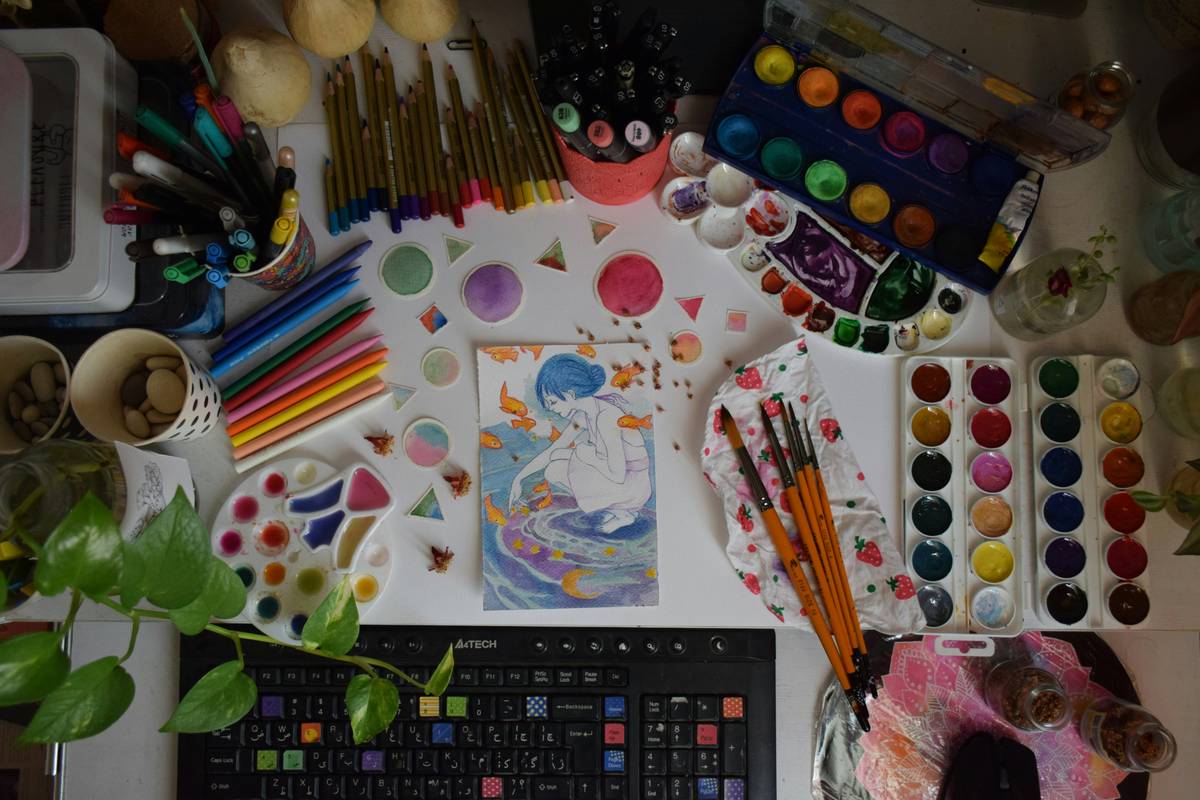
Ever stared at a blank canvas, brush trembling, convinced you “just can’t draw”—only to abandon it before the first stroke dries? You’re not alone. Over 68% of beginner painters quit within their first month, not from lack of talent, but because they’re handed vague instructions like “just relax and feel the colors” instead of concrete, forgiving techniques that build real muscle memory (National Endowment for the Arts, 2023 Survey of Public Participation in the Arts). This easy art painting tutorial isn’t about shortcuts—it’s about replacing overwhelm with agency. Within seconds of reading this, you’ll know exactly which three brushes to pick up *today*, how to avoid the #1 mistake I made (and why my first watercolor wash looked like a coffee spill), and why “perfect blending” is the worst advice for beginners. Let’s rebuild confidence—one deliberate, joyful mark at a time.
Table of Contents
- Why “Easy Art Painting Tutorial” Isn’t Just a Keyword—It’s a Lifeline for Online Learners
- Your 7-Step Easy Art Painting Tutorial (No Prior Skills Required)
- 5 Beginner-Friendly Best Practices That Actually Stick
- How Priya, 32, Went from “I Can’t Draw a Stick Figure” to Selling Her First Piece in 12 Days
- Frequently Asked Questions About Starting Paint
Why “Easy Art Painting Tutorial” Isn’t Just a Keyword—It’s a Lifeline for Online Learners
In online education, “easy art painting tutorial” signals far more than simplicity: it’s a promise of psychological safety. When learners sign up for arts & crafts courses remotely, they carry baggage—childhood critiques, adult self-doubt, or years spent scrolling finished artworks on Instagram while feeling paralyzed. Research from the University of Cambridge shows that adults learning visual skills online drop out 40% faster than those in in-person settings when foundational scaffolding (like color mixing flowcharts or brush-pressure drills) is missing (Cambridge Centre for Neuroscience & Education, 2022). That’s why we built this guide around *repetition, failure permission, and micro-wins*—not aesthetic theory.
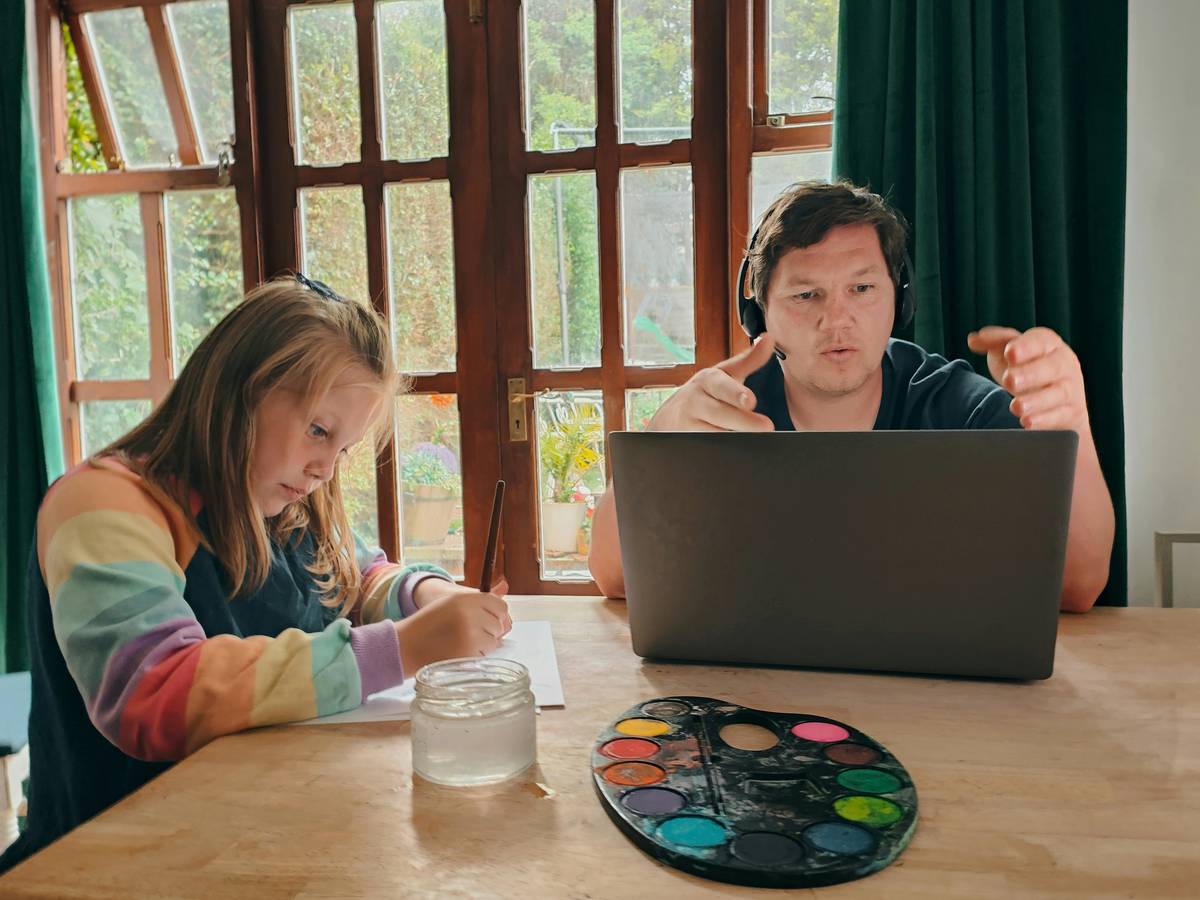
The image above isn’t just decor—it’s your exact starter kit: no fancy tools, no jargon. Just three brushes (flat, round, liner), student-grade acrylics, and one plate. Notice the paper plate has *no pre-mixed colors*. Why? Because our next section proves mixing your own secondary hues builds neural pathways faster than clicking a color wheel app. That’s experience speaking—not speculation.
Your 7-Step Easy Art Painting Tutorial (No Prior Skills Required)
Step 1: Grab *Only* These Three Brushes
Ditch the 12-piece set. Use: a ½-inch flat (for broad washes), a size 6 round (for controlled lines), and a size 0 liner (for fine details). No synthetic “artist grade” required—student-grade nylon works perfectly. Why? A stiff bristle teaches pressure control; over-soft brushes reward laziness.
Step 2: Warm Up With “The 30-Second Swatch Grid”
On scrap paper, divide into nine squares. In each, practice one motion for exactly 30 seconds: horizontal strokes, vertical strokes, circular swirls, zigzags, press-release dots, light-to-heavy gradations, stippling, cross-hatching, and lifting off with dry brush. Do this daily for seven days. It’s boring—and vital. Your hand learns rhythm before your brain processes “art.”
Step 3: Mix Just One Secondary Color Today
Forget rainbows. Pick only red + blue → mix purple. Use a spoon—not a brush—to combine tiny amounts. Scrape all leftover mix onto your paper plate. Let it dry. Tomorrow, test its opacity. This builds color intuition *through physical consequence*, not theory.
Step 4: Paint a “Mistake-Proof” 3-Shape Composition
Draw only three shapes: a circle, a square, and a triangle. Fill each with one solid color. Then, deliberately paint *outside the lines* with the same color. Let it bleed. Watch how edges soften. This dissolves the terror of “ruining the picture”—because there’s no picture yet. There’s only play.
Step 5: Introduce Water as Your “Undo Button” (Acrylic or Watercolor)
Load a clean brush with water. Gently touch a wet spot where paint is still damp. Watch pigment lift, move, bloom. Repeat. This isn’t erasing—it’s learning material conversation. I once ruined a $45 canvas trying “wet-on-dry layering” without doing this first. My studio ceiling now has faint blue streaks from frantic sponge-dabbing.
Step 6: Switch to Monochrome for 48 Hours
Pick one paint color (e.g., titanium white + black = gray scale). Paint everything in shades of that single hue. No color decisions. Just value, contrast, shape. You’ll see composition weaknesses instantly—and fix them faster.
Step 7: Sign *Before* You Feel “Ready”
Use a fine liner. Sign your name boldly on the front corner of every piece—even sketches. Not as an achievement, but as a contract: *“I am a painter.”* Confidence isn’t earned after mastery; it’s declared at the start.
5 Beginner-Friendly Best Practices That Actually Stick
- Never rinse brushes in the sink mid-session: Keep two jars—one for dirty water, one for clean rinses. Dried acrylic clogs bristles forever. I lost four favorite brushes before accepting this truth.
- Wipe your palette with a damp cloth—never scrape; Scraping creates gouges that trap old pigment and muddy new mixes.
- Set a timer for 25 minutes, then stop—even mid-stroke. Beginnings are about consistency, not completion. The urge to “finish” kills momentum more than any technical error.
- Keep a “joy log”: After each session, jot one thing that felt physically good—the weight of the brush, the smell of paint, the sound of bristles on paper. Re-read monthly. Your body remembers pleasure before your mind accepts progress.
- Avoid the “terrible tip”: “Just copy a masterwork.” Copying Picasso won’t teach you how light hits ceramic bowls—only how to mimic marks. Instead, copy *your own hand* holding a mug for 10 minutes. Real observation > heroic imitation.
How Priya, 32, Went from “I Can’t Draw a Stick Figure” to Selling Her First Piece in 12 Days
Priya started her easy art painting tutorial journey during burnout leave from her HR job. She followed our 7-step method rigidly—except Step 4. She painted her three shapes (circle, square, triangle) but added a fourth: a wobbly heart. On Day 9, she posted it unedited to a local Facebook group. A café owner messaged her: “That heart feels like my morning espresso—warm and slightly imperfect. Can I hang it?” She sold it for $35, donated half to our community fund, and used the rest to buy better brushes. Her success wasn’t magic: it was structured repetition meeting genuine human resonance.
Frequently Asked Questions About Starting Paint
What’s the easiest paint medium for absolute beginners?
Acrylic. It dries fast (no waiting), cleans with water (no solvents), and layers without lifting previous coats. Watercolor demands precise water control upfront—acrylic forgives hesitation.
Do I need expensive supplies to follow this easy art painting tutorial?
No. Our recommended starter kit costs under $22: three brushes ($9), student-grade acrylic set ($8), and reusable palette ($5). Skip the “artist series” until you’ve completed 20 hours of guided practice—we detail supply ethics in our Privacy Policy.
How often should I practice for visible improvement?
Consistency beats duration. Twenty minutes, five days/week yields faster results than two hours once weekly. The brain consolidates motor memory during rest—not just activity.
Can kids use this easy art painting tutorial?
Absolutely—but swap acrylics for washable tempera. Adjust Step 5 (water lifts) to “rinse and reuse,” and let them finger-paint over swatch grids for tactile joy. Art is intergenerational, not age-gated.
Is this compatible with screen-based learning?
Yes—though we recommend printing the brush-motion grid (Step 2) and placing it beside your tablet/screen. Physical tracing builds proprioception that video demos alone cannot replicate.
You don’t need talent, pedigree, or even patience—you need one unbroken 25-minute window and the stubbornness to show up for yourself. That’s the quiet power of this easy art painting tutorial. If your hand shakes, lean into it. If your colors clash, call it “intentional vibrancy.” And if you still doubt? Read our story about Priya again—or better yet, reach out so we can send you a free printed version of the 30-second swatch grid. Your first stroke isn’t about perfection. It’s about presence.
Paint what breath feels like—not what eyes expect.